
Full Self Driving - Just in time to save Boomers from the world they helped build
In a world built for the car, aging 'Baby Boomers' face losing their independence. Self driving and Robotaxis are finally coming to fruition after a decade of promises.

North America wasn't always built for the Car, in a few fading but still living memories, North America as it was before the bulldozer and highways can be vaguely recollected. Progress, is an American national obsession it seems, a kind of manifest destiny into the future. Cities and towns were torn down, smashed apart to create a new future of highways, suburbs and a new kind of personal freedom that could only be found behind a steering wheel.
(Check out this instagram if you want to see what i’m talking about)
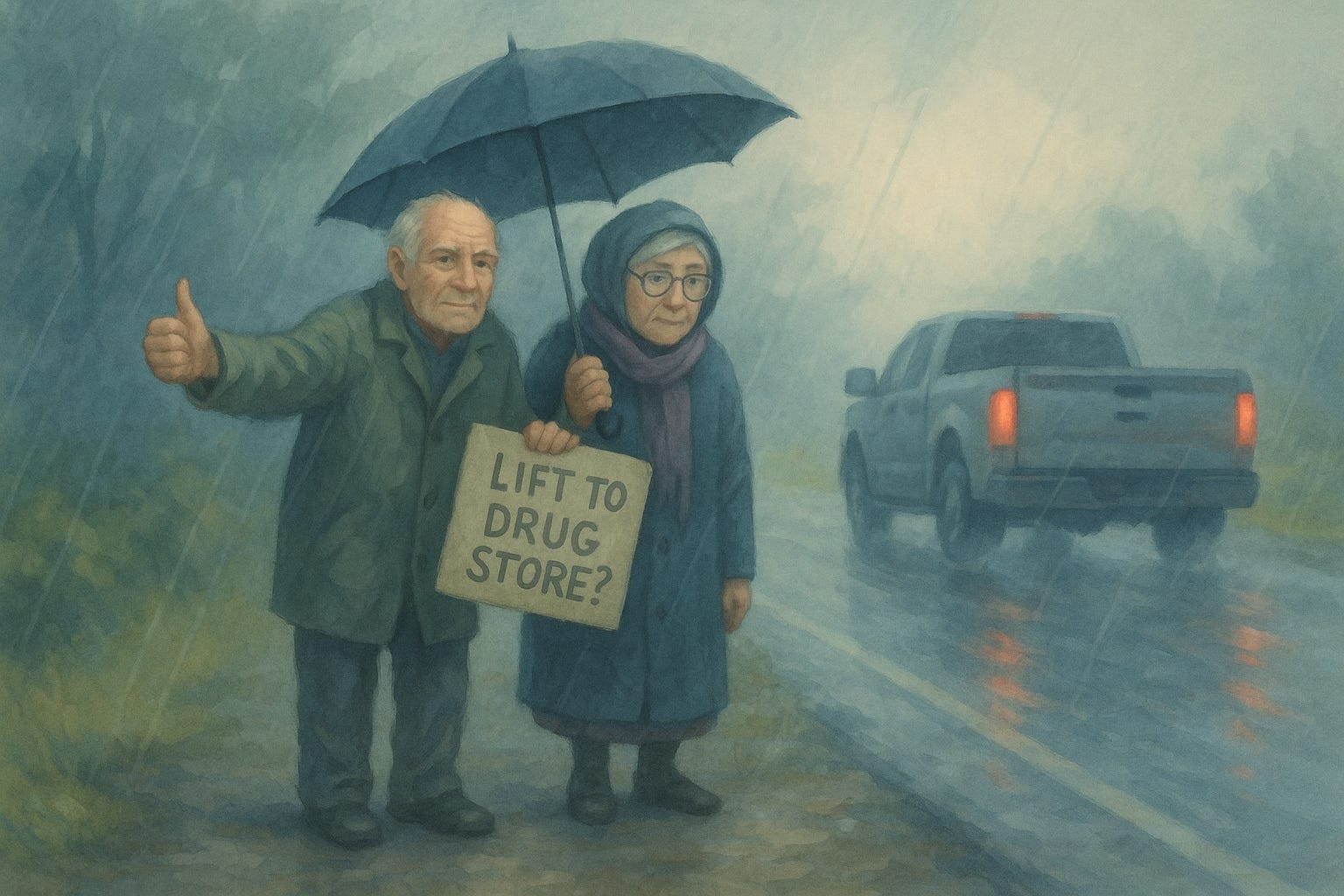
In creating this future, the car moved from a luxury to a necessity for basic functioning in society. All across American towns and cities of walkable compact neighbourhoods were erased and replaced with new landscapes traversable almost exclusively by car. Outcrops of suburbs only accessible by cars sprang up all across North America. In the rush to build a world compatible with the freedom of the automobile, many North Americans lost the freedom to not own a car instead.
The Boomer generation of North America, arguably the most car obsessed, have lived their entire lives within this car-centric mode. Basic tasks like going to work, buying groceries, meeting friends, even going to a park for a walk, require the use of a car. To many the thought of walking to the grocery store is unthinkable.
And they're not not wrong. Walking to a grocery store is unthinkable when the world is built for the car and hostile to those outside of the car.
So what do you do when driving becomes something you can no longer do?
Enter the world of the autonomous vehicle.
Tesla has Robotaxi/Cybercab, Google has Waymo, Amazon has Zoox among others. Each in their own way attempting to provide a safe, autonomous taxi solution. The benefits of driverless taxis are clear. Massive scale, massive cost savings, theoretically safer than a human driver all whilst providing a better customer experience. No awkward interactions, private cab, customizable preferences (music, lighting, temperature etc), comfortable ride experiences, with availability at all hours. The product on offer to customers will be compelling.
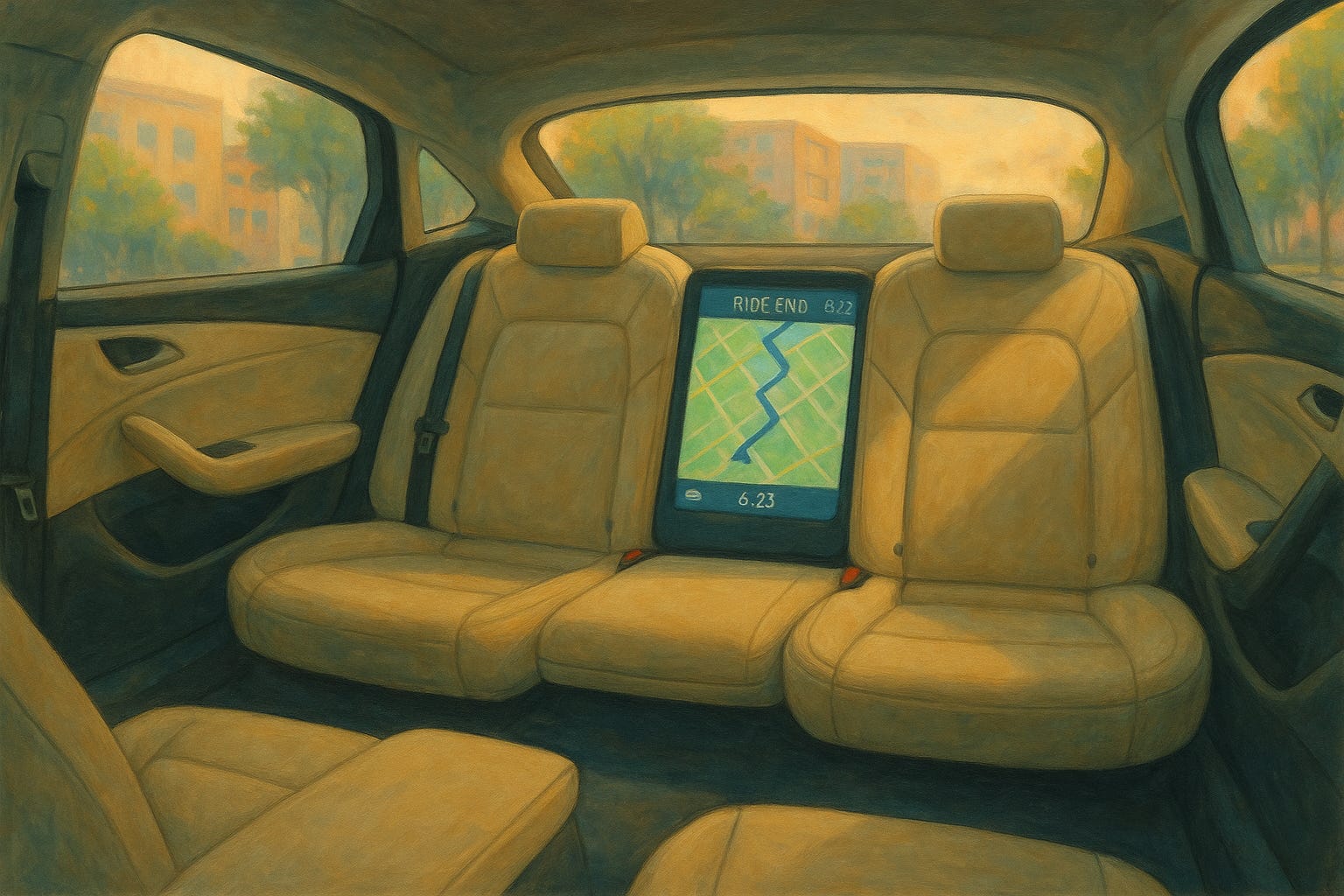
Then there’s the economics of autonomous taxis which due to their huge cost advantage will likely allow for taxi service into areas often poorly served by ride share apps. Rural routes, awkward pickup and drop off locations, bad weather or traffic conditions, public holidays, autonomous taxis will be there for customers.
For those without a car, or those that can no longer drive due to age or illness, autonomous taxis will be a lifeline in ways that existing taxi services are prohibited by cost to be. Bring the cost per mile down far enough with enough availability and autonomous taxis may tempt current drivers out of their cars too, making the roads safer for all by giving those that really shouldn’t be driving (poor eyesight, advanced age, intoxicated etc) a convenient cheap alternative.
I will go as far as to say the introduction of autonomous taxis will save lives. Not just by driving safer, but by giving those that cannot drive, a means of independent mobility. That pain in your side? Take a Zoox to the doctors for a few dollars. Feeling sad? Visit your friends in a Waymo for couple bucks. Need to bulk buy something you rely on? Take a Robotaxi to Costco and ask it to wait in the parking lot. Quality of life practically saves lives and mobility and independence are extremely important to that end.
How does this relate to humanoid robots? That is after all what this substack is about. Good question.
Firstly autonomous taxis and humanoid robots are both forms of real world intelligence, or embodied AI. Right now Tesla is leveraging the knowledge and strategies they have learned from the creation of FSD, the brains behind their autonomous taxis, into the models and software that powers their Optimus humanoid robot.
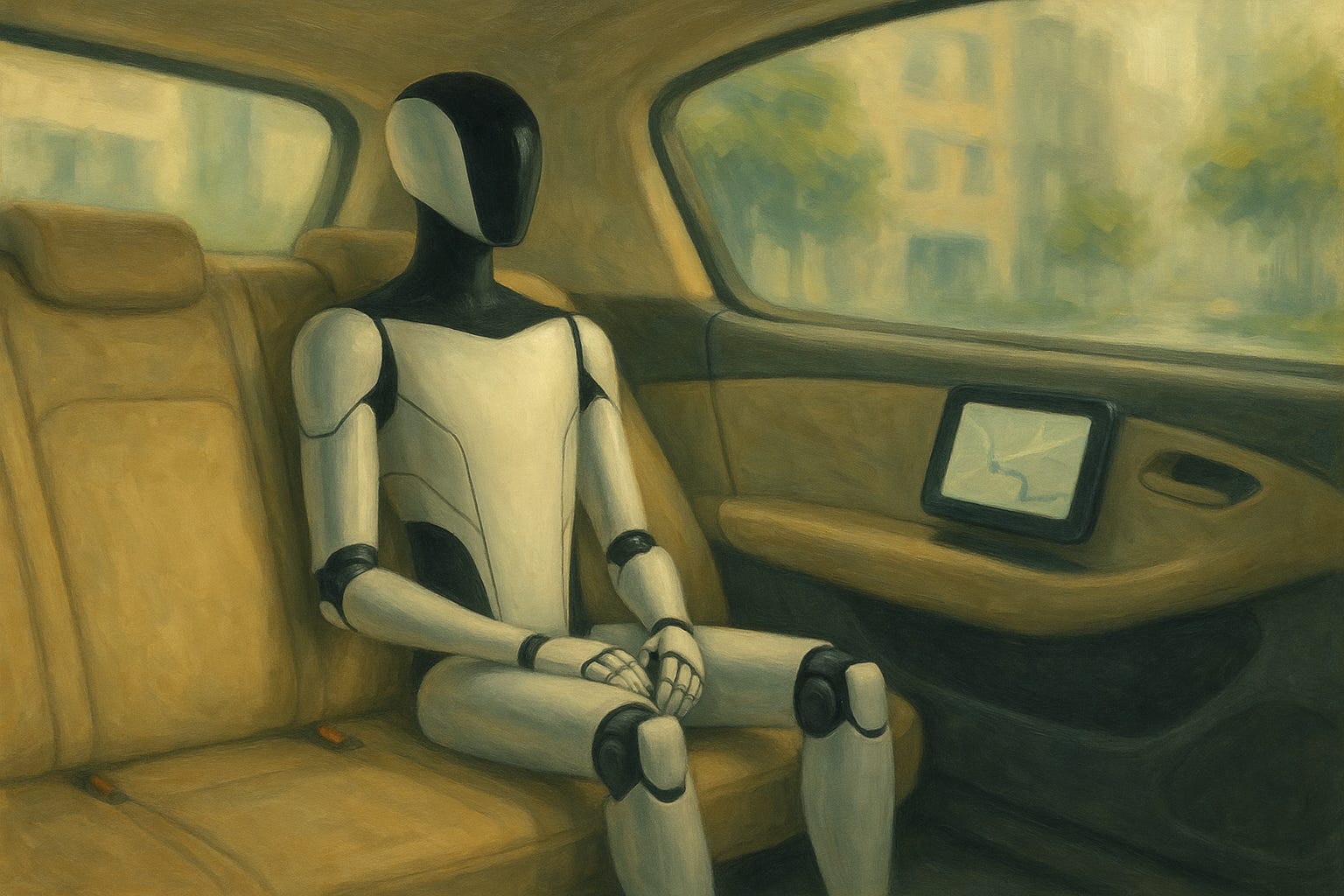
Secondly autonomous taxis won’t just be moving humans, they’ll move bots as well. Humanoid robots will be taking taxis from place to place just as much as humans, possibly more. Bots for doing deliveries, cleaning, caring, cooking, maintenance, nursing and doctor bots etc will travel around communities caring for those in need. Social care, especially for those that could not afford anything otherwise, is about to be revolutionized in ways few have thought possible.
And so, just in time, the technology born from the same relentless drive for progress that once paved over walkable towns may now offer salvation to those who lived through it. Self-driving cars and autonomous taxis, will hand back independence to a generation facing its twilight within the very suburban sprawl it helped create. The irony is a little funny, the car, once the symbol of youth, power, and mobility, returns in automated form to carry its most devoted generation through their final journeys, quietly restoring a measure of dignity, convenience, and connection in a world that too often demands four wheels to simply belong.